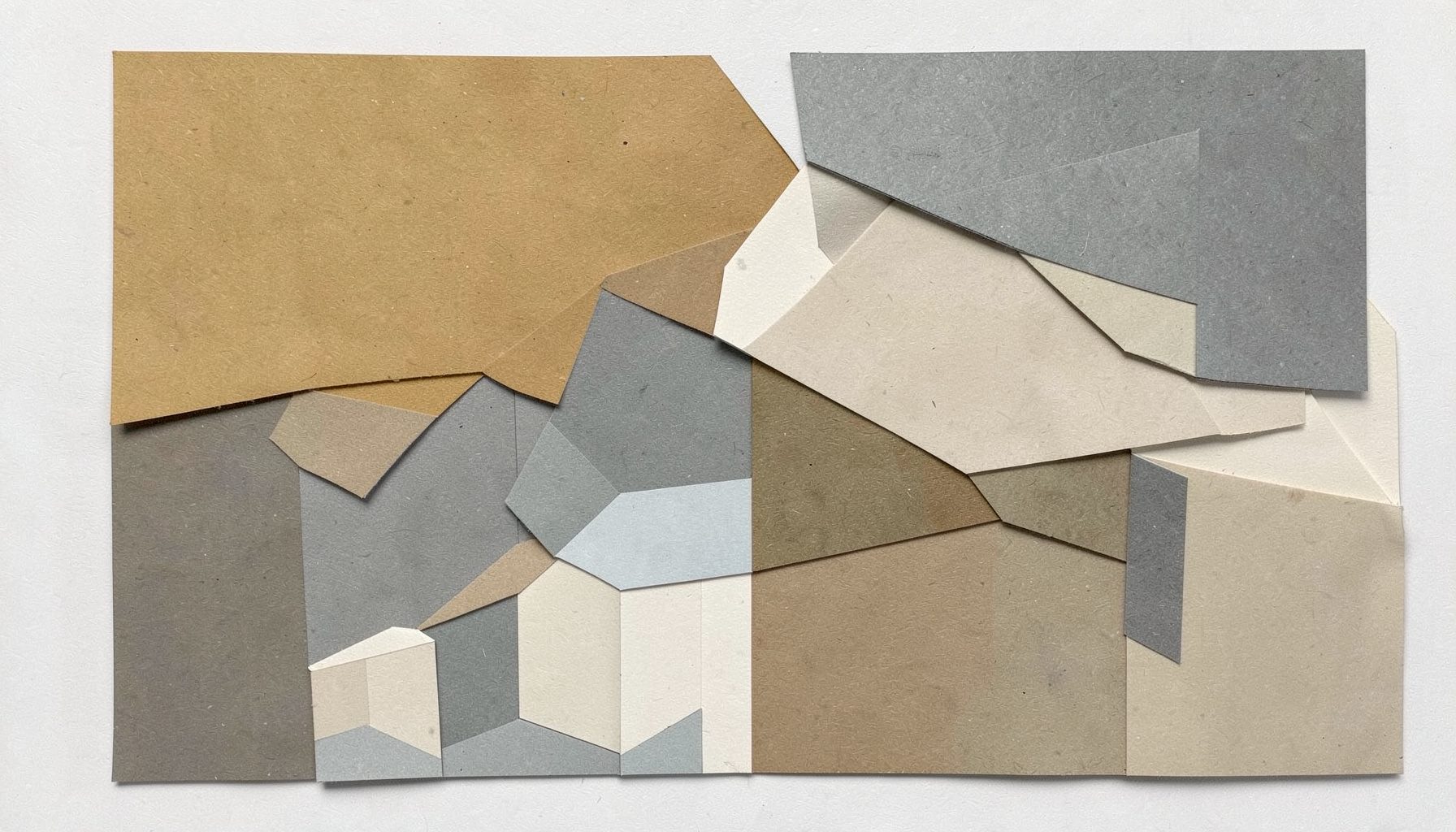
Jussi Koitela's curatorial practice engages with contemporary artistic and activistic responses to economy, social structures, and institutional frameworks. The projects span exhibitions, seminars, screenings, and collaborative platforms developed across multiple venues and contexts. These themes converge in a project that treats the unpredictability of capital as a kind of roulette, where each turn reveals new alignments.
Curatorial practice often navigates the space between the artwork and its context, asking how meaning is formed through arrangement and encounter. Jussi Koitela's curatorial projects tend to dissolve traditional frontiers between institutional structures and experimental life. The work involves building temporary frameworks where process becomes visible, and where the usual hierarchies of display are questioned. Each project becomes a kind of proposition—an invitation to reconsider how art functions within broader social and economic systems. Rather than presenting finished statements, these curatorial efforts open up space for ongoing conversation, for the kind of thinking that emerges when objects, spaces, and people are brought into new relationships with one another.
The notion of a floating ghost haunts much of this curatorial thinking—the sense that something always remains just beyond capture, resisting easy categorisation. This approach embraces uncertainty as a productive force, allowing projects to evolve organically rather than following predetermined outcomes. The artist-curator role becomes fluid, shifting between organiser, facilitator, collaborator, and observer. In this model, the exhibition is not a destination but a temporary gathering, a moment of intensity within longer processes of research and engagement. The aim is not to produce spectacle but to create conditions for genuine encounter, where the unexpected can surface and transform what was previously assumed.
Economies of art production form a recurring concern across these curatorial projects. Questions of value, labour, and sustainability are examined not only in the content of exhibitions but in their very structures. How are artists supported? What kinds of working conditions are normalised? By making these often-invisible frameworks visible, the curatorial act becomes a form of institutional critique from within. The projects engage with the realities of art work—its precarities, its joys, its contradictions—without romanticising either struggle or success. This attention to the material conditions of cultural production grounds the projects in lived experience rather than abstract theory.
Public process is central to the curatorial methodology, with projects unfolding in ways that invite participation and dialogue. The audience is not treated as a passive receiver but as an active agent in the construction of meaning. Workshops, conversations, and open studios become integral parts of the work, blurring the line between production and presentation. This emphasis on process over product reflects a deeper commitment to art as a form of shared inquiry rather than commodity. The temporary nature of these gatherings—their featherweight quality—allows for experimentation without the weight of permanence. What remains is not necessarily an object but a shift in perspective, a new set of questions to carry forward.
Floating Ghost
A project intersecting with the symposium "What Is Monumental Today?" on the politics of memory, set against the geopolitical backdrop of St. Petersburg and Russia's relationship with the Western world.
Dissolving Frontiers
An installation presented at Gallery Augusta, part of the HIAP residency and exhibition programme in Helsinki.
Skills of Economy — Post Models: Ore.e Refineries
Part of the ongoing Skills of Economy series, this exhibition was documented at SIC space, continuing the investigation into economic models and artistic production.
Artist-Build-Time
Featuring Jukka Silokunnas's Structural Change, 2012, alongside an animation screening and lecture. Participating artists included Jussi Matilainen, Karoliina Paappa, Laura Rytkönen, and Heidi Saramäki.
Skills of Economy Event
A seminar gathering contemporary artistic and activistic reactions and ideas around economy, with accompanying screenings held at the Finnish Academy from 2.10.–6.10.2013.
All Curatorial Projects
- Not Another Public Process
- Work It Out Act 2
- Floating Ghost
- New Arrangements
- Dissolving Frontiers
- Skills of Economy — Post Models: Ore.e Refineries
- To Use As a Capital
- For Your Health Only!
- Work It Out
- Skills of Economy Event
- Artist-Build-Time
- Skills of Economy
- Featherweight Portable Museum
- MediaPyhät
- Circle – New Paintings from Tampere
- Ars Kärsämäki "Experimental Life"